
Game Production
Summary of my latest projects and roles for each.


Set In Stone
Set in Stone is a student-run project where I served as lead Producer. Our goal is to have a complete game by June 2026, come see our demo at GDC.
Engine: Unreal Engine
Genre: FPS Online Multiplayer Hero Shooter
Team Size: 25+
Project Duration: Sept. 2025 - ongoing
Production Responsibilities:
-
Organize and lead a team of 25+ students in multiple contexts, including:
-
2.5 hour classes twice a week
-
Out of class lead meetings
-
One on one reviews
-
Virtual Check-ins
-
-
Deliver weekly progress presentations
-
Organize weekly sprint tasks
-
Manage project deadlines/ deliverables
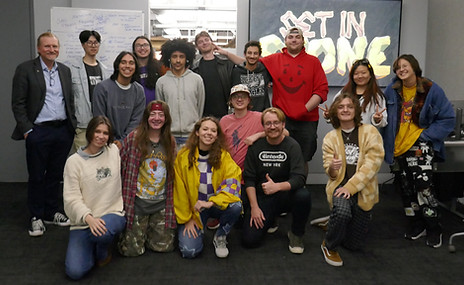
Producing for a Large Team
Organizing a team of this size across many different disciplines of creative technology requires a lot of planning, consistency, and research. Each week, I communicate our weekly goals through progress presentations, delegate tasks using agile sprints, and address flags during the sprint and adjust timelines or support to keep our progress on track.
Our project is sorted into 3 teams, art, design, and tech. I communicate both with the leads of these teams and directly with all the members of the team to make sure that they have access to the materials needed to meet their goals. Game design requires lots of cross-discipline communication. I spot issues or breakdowns in communication often before they happen. This could be in making sure that the design team has communicated their needs to the concept artists making a tool and that the concept artists get those sketches to a technical artist on schedule.
Organizing Sprints
We use agile methodology to organize our team into weekly sprints. I check in with team members consistently during the week based on their sprint task data. We regularly meet our burn down goals.


Stand-ups
Every class begins with stand-ups. Team members self-report their energy and current progress on their tasks. We talk about and address any flags that come up during this time. Generally in addition to my standup I talk about our overall sprint progress and any changes that could affect more than 1 team.
Progress Presentations
Every Monday class begins with a progress presentation. This communicates our current progress to our director as well as communicates common goals across teams. The presentation always includes our design direction, our burn down from the previous week’s sprint, work that was accomplished in the previous week, goals for the next sprint, and a review of our quarter timeline and goals.

For this project, we want our game to play on the themes of kinship, resourcefulness, and exploration. We re-introduce this idea each week to make sure all teams design with the same ideas in mind.

We run weekly sprints, but often we have larger goals that are accomplished across multiple sprints. We organize these into 3 week goals called ‘runs.’ Runs help our team understand the larger goals we are working towards each week and helps the leads team and myself know which tasks are most important to delegate this sprint.
Dev Logs
I also write a weekly dev log to talk about my technical work for the week. I handle sound and technical art tasks in addition to producing. This allows me to reflect on my development process and report my work and thought process to those who might also be interacting with my material.
Outreach
Over the course of the project I have had to do multiple forms of community and professional outreach. This work ranged from recruitment to onboarding team members to organizing public playtests to reaching out to professors for reviews and recommendations.
Each of these outreach opportunities required unique approaches and presented their own challenges. Ultimately what I learned was not to hesitate to reach out to people and that talking about the project across multiple platforms is key.
Infection
Infection is an Indie Game project from Ghoul Studios. I serve as the lead designer and technical producer. I created the game’s design based off of our director’s instructions and developed all of our documentation for the technical implementation of the designs.
Engine: Godot
Genre: Survival Horror
Team Size: 16
Project Duration: Nov. 2024 - ongoing
Production Responsibilities:
-
Organize and lead tech team
-
Hold weekly meetings to talk about design progress
-
Recruit new team members
Explaining Design Needs to a Technical Team
Besides writing thorough documentation for the technical team, I also create video explanations of my design concepts where I draw out our needs on a whiteboard and explain specific concepts in more depth.


I also organize our team into simplified sprint sheets. This project is asynchronous and has more flexible timelines because it is student-led outside of class work. I check in with developers based on the sprint sheet and communicate progress and needs back to the director.
Explaining Technical Needs to an Art Team
I also communicate heavily with the art team to explain both design and technical needs. Most of this team was unfamiliar with the game art pipeline, and we have spent a lot of time talking about how our development pipeline will work with our team’s needs.
We’ve decided to use a circular development pattern. I communicate a design idea to the developers and concept artists. The developers implement the idea technically with no art while the concept team makes work based on the implementation and design input. The art team then works on creating the required assets, while the technical team works on a new assignment. When the assets are ready, the technical team circles back to the previous task and implements the assets while the art team creates the next set of materials.
Recruitment
Part of early team development was recruiting models and developers from both online and in person creative spaces. I made our promotional material, put together pitch decks, and reviewed and onboarded applicants.
